Finitude
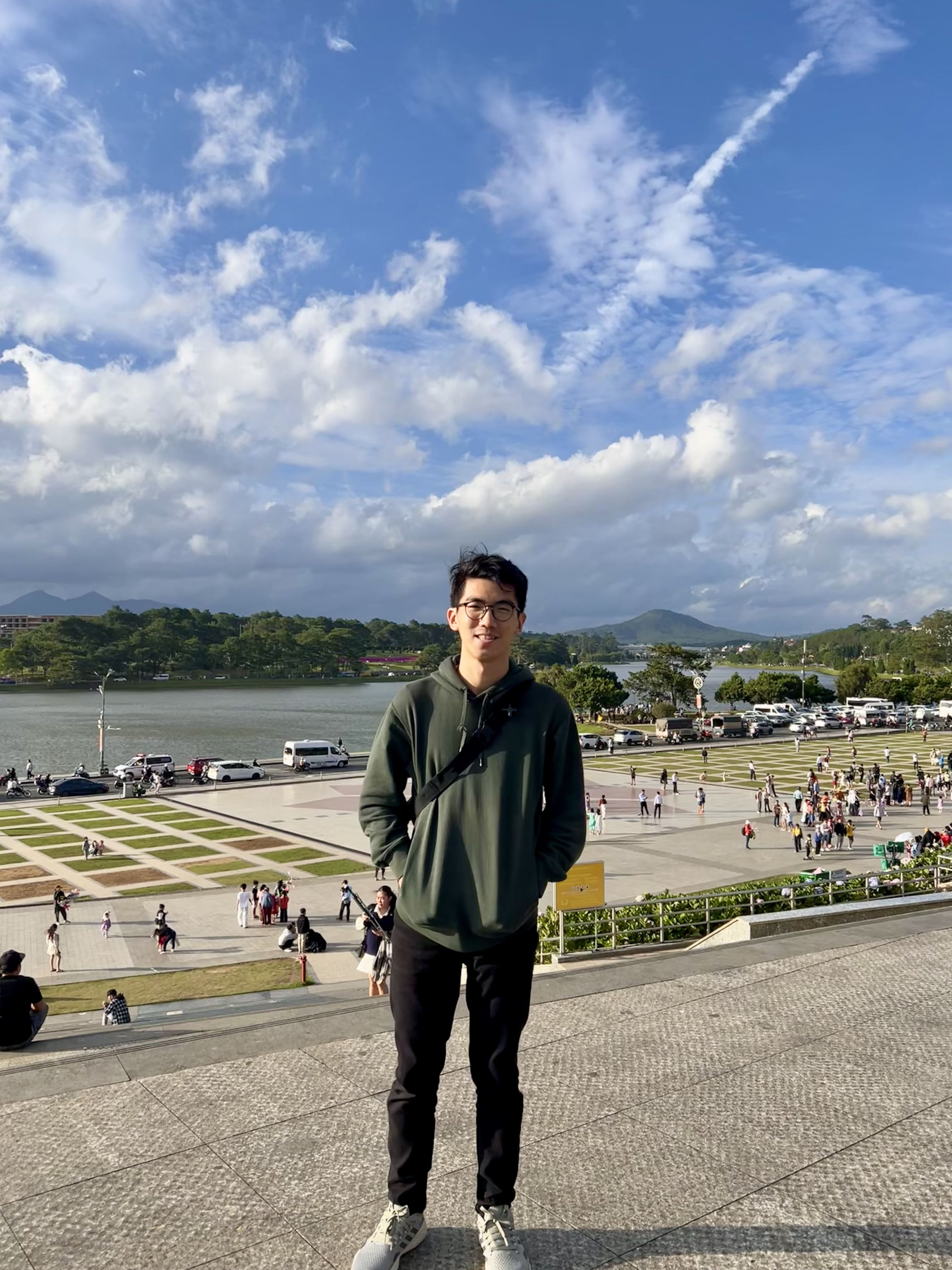
Recently, I took the leap of faith to solo travel. I wanted it to be more like a silent retreat and enjoy the beautiful land of Vietnam alone.
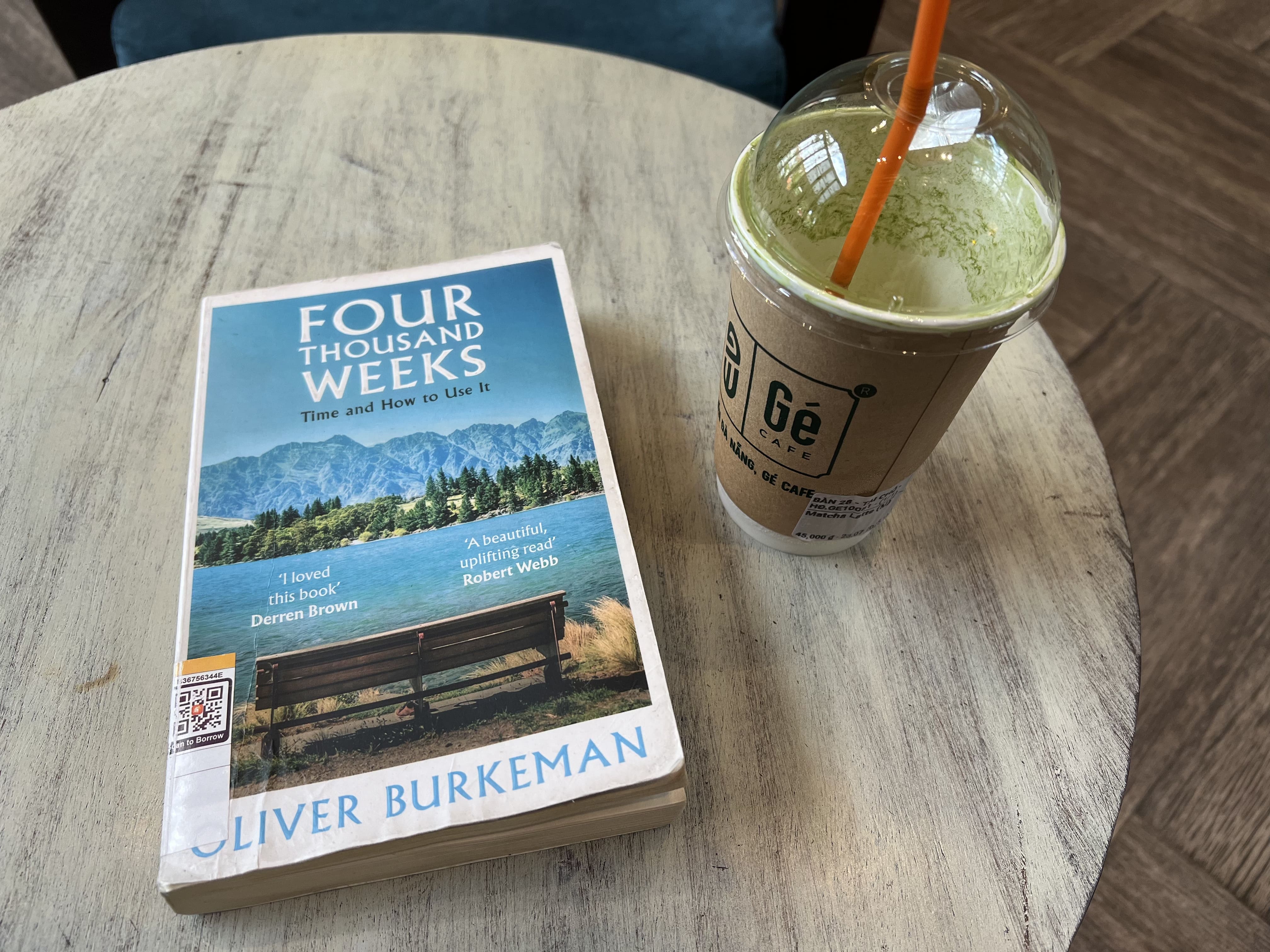
As I journeyed through the 11-day trip across multiple cities in Southern and Central Vietnam, I was consuming a book titled Four Thousand Weeks. Days felt extremely slow and peaceful, and I had so much time to dwell on Burkeman’s resonant ideas. The deafening silence that I experienced worked wonders. I felt revitalised, and gained new perspectives about reality. Reading this book became the most influential part of the trip.

I didn’t keep a concrete itinerary. The idea was to immerse myself in the people, observe and stay aware of my surroundings, and go with the flow. This was very different from my past trips, where my friends/family and I would pack our days because 1) we wanted to maximise limited holiday time, 2) the influence of the sunk cost effect of having paid so much for flight tickets and hotels, and 3) we are overly stimulated human beings (thanks TikTok and Instagram Reels!), so it is difficult to sit still and do nothing. Because of the spontaneity and liberty of this trip, I felt very at ease and at home.
Embracing Finitude and The Meaninglessness of Life

This book invited me to embrace finitude – that 1) you cannot do or have everything, 2) there are limits on what you can control or achieve, and 3) life has natural boundaries and an end. As a productivity nerd, I have always upheld an instrumentalist attitude towards time. This book challenged that mindset, showing me that even rest doesn’t need to justify itself.
It also explores the notion that life has no inherent meaning (at least that’s what I inferred from the author’s idea on cosmic insignificance therapy), which is a paradoxically liberating idea. Alongside this comes a humbled wonder at the sheer improbability of being alive at all, and Camus’ absurdism became a workable frame.
As long as you believe that life’s real purpose is in the future (maybe after you get a job, or find the right partner), you can avoid dealing with the harsh reality that your life is not moving towards some ultimate “moment of truth” and the moment you’re living is all there is. Evidently, our society has become a place where delusion thrives, because it is easier to think that the future has something waiting for us than to resign ourselves to the reality that this is it.
Practically, this trip gave myself space to reflect on where I am right now. I’m learning to face the icy blast of reality head‑on, to let go of FOMO by choosing to choose (embrace JOMO instead!), and to reject treating time as merely a tool for productivity. Much time‑management advice from productivity gurus turns out to be about seeking control, and noticing that has been clarifying because the struggle for control over the future is a stark example of our refusal to acknowledge our built-in limitations when it comes to time.
Appendix: Quotes
Here are some quotes I very much relate to while I was reading the book.
1. The Limit-Embracing Life
An Icy Blast of Reality
In practical terms, a limit-embracing attitude to time means organizing your days with the understanding that you definitely won’t have time for everything you want to do, or that other people want you to do—and so, at the very least, you can stop beating yourself up for failing.
And it means standing firm in the face of FOMO, the “fear of missing out,” because you come to realize that missing out on something—indeed, on almost everything—is basically guaranteed. Which isn’t actually a problem anyway, it turns out, because “missing out” is what makes our choices meaningful in the first place. Every decision to use a portion of time on anything represents the sacrifice of all the other ways in which you could have spent that time, but didn’t—and to willingly make that sacrifice is to take a stand, without reservation, on what matters most to you.
4. Becoming a Better Procrastinator
The Art of Creative Neglect
- Principle #1 — pay yourself first when it comes to time
- Principle #2 — limit your work in progress
- Principle #3 — resist the allure of middling priorities
Perfection and Paralysis
The bad procrastinator finds himself paralysed precisely because he can’t bear the thought of confronting his limitations.
The Inevitability of Settling
You can’t become a lawyer without settling with law or politics, and deciding to forgo the potential rewards of other careers. — 85
Institutions help with settling — signing a job offer, marriage, etc
6. The Intimate Interrupter
Boredom is aggressively unpleasant because it demands that you face your finitude, that you resign yourself to the reality that this is it. — 106
The way to find peace in a difficult project or a boring Sunday isn’t to chase peace, but to acknowledge the inevitability of discomfort and turn more of your attention to the reality of your situation. — 109

7. We Never Really Have Time
Worry, at its core, is the repetitious experience of a mind attempting to generate a feeling of security about the future, failing, then trying again and again. But the struggle for control over the future is a stark example of our refusal to acknowledge our built-in limitations when it comes to time.
Heidegger’s idea of “we are time” — we don’t own the time we expect to have, say, in the next 3 hours to watch a movie, because your boss could call you urgently, the electricity may go off, you could die.
A surprisingly effective antidote to anxiety about uncertainties of the future is to simply realise that this demand for reassurance from the future is one that will definitely never be satisfied, no matter how much you plan or fret. You can’t know that things will turn out all right. — 119
Your life (or the history of the world) is a dizzying matter of coincidence piled upon coincidence — 120
Planning is an expression of your current thoughts about how you’d ideally like to deploy your modest influence over the future. The future, of course, is under no obligation to comply. — 123
8. You Are Here
As long as you believe that the real meaning of life lies somewhere off in the future, you get to avoid facing the unpalatable reality that your life isn’t leading towards some moment of truth that hasn’t yet arrived. Our obsession with extracting the greatest future value out of our time blinds us reality that, in fact, the moment of truth is always now. Therefore you had better stop postponing the ‘real meaning’ of your existence into the future, and throw yourself into life now. — 136
Trying to have the most intense possible present-moment experience is a surefire way to fail. — 139
Living more fully in the present may be simply a matter of finally realising that you never had any other option but to be here now. — 140
9. Rediscovering Rest
Rules for Rest
While capitalism gets its energy from the permanent anxiety of striving for more, the Sabbath embodies the thought that whatever work you’ve completed by Friday might be enough. One need not be a religious believer to feel some of the deep relief in the idea that today, at least, there might be nothing more you need to do in order to justify your existence. — 153
Self-imposed ideas of rest can fill the vacuum to some extent, but they lack social reinforcement, so they’re inevitably harder to abide by — and because they are reliant on willpower, they’re prone to all the hazards involved in trying to force yourself to be more “present in the moment” — 154
What we can do in order to experience genuine rest, is simply to stop expecting it to feel good. — 154
Hiking as an End in Itself
Taking a walk, or listening to a favorite song is an “atelic activity” - activities in which the only thing we’re trying to get from them is the doing itself.
When your relationship with time is almost entirely instrumental, the present moment starts to lose its meaning. — 157
Arthur Schopenhauer on human desire: not yet having them is bad, but getting them is arguably even worse. — 157
Rod Stewart, Radical
Atelic vs hobbies: hobbies sound slightly pathetic because hobbies have acquired this embarrassing reputation in an era so committed to using time instrumentally. — 158
In order to be a source of true fulfillment, a good hobby probably should feel a little embarrassing; that’s a sign that you’re doing it for its own sake, rather than for some socially sanctioned outcome. It’s also fine and perhaps preferable to be mediocre at them. — 159
“Later is always too late” — 132, 160
Our impatience stems from tech progress and it is because tech progress seems to promise that this time we might be able to make things go fast enough for us to feel completely in control of our unfolding time. — 164
BUT there’s no way to practise patience completely because you’ll still suffer from societal impatience. Your continued employment is dependent on your work performance and how fast you deliver, regardless of your feelings on the matter. — 164
People say they don’t have time to read. It’s not so much that one we’re too busy or too distractible, but that we’re unwilling to accept the truth that reading is the sort of activity that largely operates according to its own schedule. Reading something properly just takes the time it takes. — 165
We speed addicts must crash to earth. We have to give up. You surrender to the reality that things just take the time they take, and you can’t quiet your anxieties by working faster, because it isn’t within your power to force reality’s pace as much as you feel you need to, and because the faster you go, the faster you’ll feel you need to go — 170
“Second-order change”
Watching and Waiting
If you’re willing to endure the discomfort of not knowing, a solution will often present itself. — 179
Three Principles of Patience
- Develop a taste for having problems
- Embrace radical incrementalism
- Originality lies on the far side of unoriginality.
Stay on the fucking bus. — 183
12. The Loneliness of Digital Nomads
In and Out of Sync
We might be guilty of the same mistake — of treating our time as something to hoard, when it’s better approached as something to share, even if that means surrendering some of your power to decide exactly what you do with it and when. — 188
Every gain in personal temporal freedom entails a corresponding loss in how easy it is to coordinate your time with other people. The digital nomad’s lifestyle lacks the shared rhythms wired for deep relationships to take root. — 189
“The social regulation of time” — 191
If you possess the productivity geek’s natural inclinations towards control-freakery it comes to you’re time, you can experiment with what it feels like to not try to exert an iron grip on your timetable: to sometimes let the rhythms of family life and friendships and collective action take precedence over your perfect morning routine or your system for scheduling your week, because the truth is that power over your time isn’t something best hoarded entirely for yourself: that your time can be too much your own. — 201
Giving up hope doesn’t kill you. Well, it does kill you. It kills the fear-driven, control-chasing, ego-dominated version of you — you find that the civilised you died. The manufactured, fabricated, stamped, molded you died. The victim died. And the ‘you’ that remains is more alive than before. More ready for action, but also more joyful, because it turns out that when you’re open enough to confront how things really are, you’re open enough to let all the good things in more fully, too, on their own terms, instead of trying to use them to bolster your need to know that everything will turn out fine.